Friday, December 16, 2016

Cantate 140 de JS Bach :On en Tombe à Genoux.


Lors de l’audience de mercredi dernier, s’adressant aux pèlerins et aux fidèles rassemblés sur la petite place de Castel Gandolfo, Benoît XVI a parlé de la beauté de l'art comme "vraie voie vers Dieu qui est la Beauté suprême".

Ce n’est pas la première fois que le pape Joseph Ratzinger affirme que l’art et la musique constituent "la plus grande apologie de notre foi". Autant que la "trace lumineuse" laissée par les saints et davantage que les arguments relevant de la raison.

Cette fois-ci, cependant, le pape y a ajouté un souvenir personnel :

"Il me revient à l’esprit un concert d’œuvres de Jean-Sébastien Bach, à Munich, dirigé par Leonard Bernstein. Au terme du dernier morceau, l’une des Cantates, je ressentis, non pas de façon raisonnée mais au plus profond de mon cœur, que ce que j’avais écouté m’avait transmis la vérité, la vérité du suprême compositeur, et me poussait à rendre grâces à Dieu. A côté de moi se tenait l’évêque luthérien de Munich et spontanément je lui dis : En écoutant cela, on comprend que c’est vrai ; une foi aussi forte est vraie, de même que la beauté qui exprime de façon irrésistible la présence de la vérité de Dieu".

Quelle est cette Cantate de Bach qui avait touché si profondément le cœur du futur pape ?

C’est celle que Bach a composée pour la messe du vingt-septième dimanche après la Trinité, dernier dimanche avant le temps de l'Avent dans l’année liturgique luthérienne.

Parmi les quelque deux cents Cantates que Bach nous a laissées, c’est celle qui porte le numéro BWV 140.

Thursday, November 24, 2016

Bill Evans Records with Cannonball


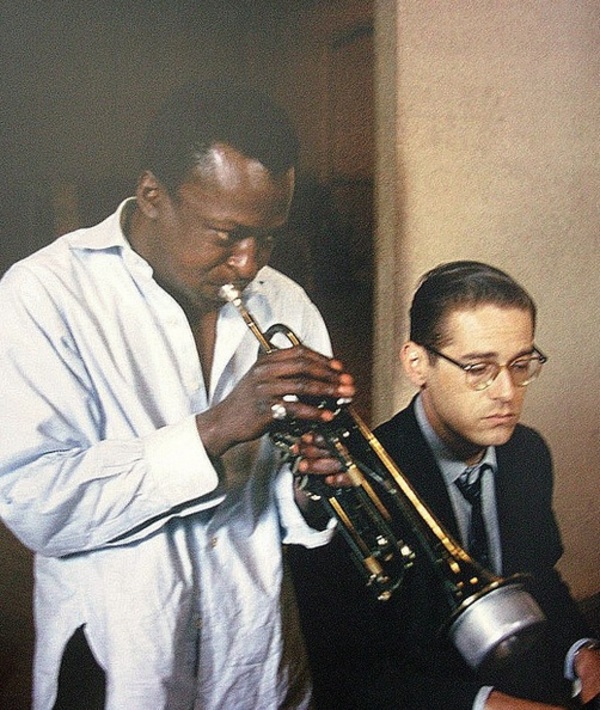
He was called the Poet of the Piano, and the Chopin of Jazz, this week Donald Macleod delves into the life and music of Bill Evans. Although Evans started off in the world of classical music, it wasn't long before he got the Jazz bug. His classical training wasn't wasted though, for it went on to influence the way he performed for the rest of his life. His touch at the piano became legendary, and his preferred ensemble for performing his own compositions, and those by others, was the Jazz trio combining piano, bass and drums. Evans came to prominence when invited to work alongside Miles Davis and, in time, Evans would go on to perform with the likes of Tony Bennett, Julian "Cannonball" Adderley, Stan Getz and Monica Zetterlund.
Performing alongside Miles Davis had brought Bill Evans to a much wider audience. Evans soon left the band though, and pursued his own career making a new album called Everybody Digs Bill Evans, which included a new work Peace Piece. Towards the end of the 1950s, things were looking good for Evans, although his addiction to heroin was starting to take its toll. He'd agreed to work with Davis again on the album, Kind of Blue, which included a work by Evans called Blue in Green, although Davis claimed it as his own. By the time Evans was thirty, he was well known, popular, and was soon to form his own historic trio including Paul Motian and Scott LaFaro. They gelled together perfectly, and went into studio to record works such as Autumn Leaves, and Evans's Peri's Scope. This pinnacle of perfection for Evans, though, was short-lived; bassist Scott LaFaro died in a traffic accident shortly afterwards.


Gibran Khalil Gibran, the painter


Wednesday, November 23, 2016

Flavia Codsi : Artiste Peintre Libanaise

Née à Beyrouth en 1961, Flavia est une artiste autodidacte.   Après avoir suivi des études en décoration d'intérieur, elle exécute des projets de perspectives d'intérieur, des trompe-l'oeil, et des peintures murales............ http://www.onefineart.com/en/artists/flavia_codsi/index.shtml


Saturday, November 19, 2016

Mahler's 2nd Symphony "Resurrection" (Audio + Score)

Symphony No. 2 in C minor "Resurrection" by Gustav Mahler is a symphony composed between 1888 and 1894. The monumental style it shares with the First and Third Symphonies, The vast finale with choir and vocal soloists situates it in the line of the Ninth Symphony of Beethoven. This is one of Mahler's most popular works.

Best interpretation ever by New York Philharmonic cond/ Leonard Bernstein (DG)
with Barbara Hendricks (soprano), Christa Ludwig (mezzo-soprano), The Westminster Choir, Joseph Flummerfelt